
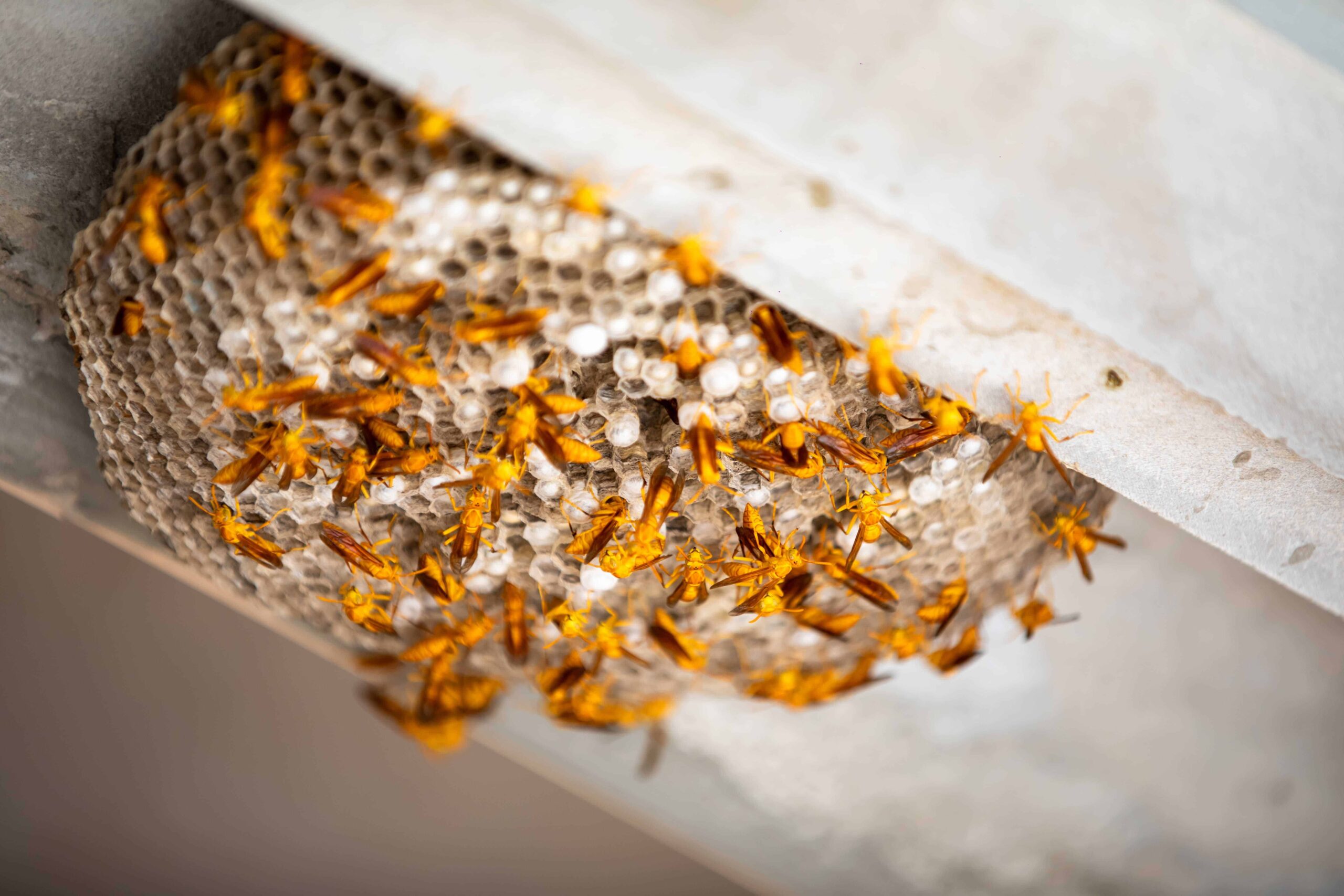
If you have spent any time browsing exhibitor booths at a home and garden show, you already know that outdoor living spaces come with a few uninvited guests. Rochester homeowners who spend their spring and summer weekends building patios, planting perennial beds, and finally enjoying the deck they saw at last year’s show often run into the same surprise: a papery, gray nest tucked under the eaves or inside a porch light fixture. The instinct for most people is panic, followed by a can of insecticide. But before you reach for the spray, it is worth understanding what you are actually dealing with.
Paper wasps have a reputation that far outpaces their actual behavior. Many homeowners assume these insects are hostile, unpredictable, and just as dangerous as hornets or aggressive yellow jackets. That myth shapes a lot of bad decisions, from tearing down active nests without protection to dousing garden beds in chemicals that harm beneficial insects along with the wasps. The truth is more nuanced, and once you understand it, managing paper wasps around your home becomes a lot less stressful.
Myth #1: Paper Wasps Are Naturally Aggressive and Attack Without Reason
This is probably the most persistent myth about paper wasps, and it is easy to see why it took hold. A wasp buzzing near your face while you are grilling or trimming hedges feels like an attack, and the sting that follows reinforces the idea that these insects are looking for a fight. In reality, paper wasps are defensive, not offensive. They sting when they perceive a direct threat to their nest, not because they are hunting for victims in the yard. A wasp investigating your soda can or hovering near a flowering shrub is foraging, not preparing to attack.
Homeowners researching this topic often land on detailed breakdowns like the one covering are paper wasps dangerous Florida, which explains how regional climate and nesting habits influence wasp activity throughout the warmer months. The pattern holds true well beyond the Southeast: these insects prioritize colony defense over random aggression, and most stings happen because someone got too close to a nest without realizing it was there, often while doing yard work or reaching into a mailbox or grill cover.
Myth #2: All Paper Wasps Are Equally Dangerous
Another common misconception treats all paper wasps as one uniform threat. In practice, there are real behavioral differences between species. Native paper wasps found throughout the Northeast tend to be relatively tolerant of human activity as long as their nest remains undisturbed. European paper wasps, an introduced species that has spread widely across the United States, are noticeably more defensive and quicker to respond to perceived threats, including vibrations from lawn equipment or nearby foot traffic. This distinction matters for homeowners deciding how cautiously to approach a nest they discover on the property.
According to Pestworld, paper wasps are not an aggressive species by nature and will only sting if disturbed or their nest is threatened, making them significantly less dangerous than commonly perceived. That single fact reframes how most people should think about coexisting with these insects. Rather than assuming every nest is a ticking time bomb, it makes more sense to identify the species, assess the nest’s location relative to high-traffic areas, and make a calm decision about whether removal is even necessary.
Myth #3: Paper Wasps Are Garden Pests with No Benefit
It is tempting to view any stinging insect as purely a nuisance, but paper wasps actually do a lot of quiet work in the garden. They are voracious predators of caterpillars, beetle larvae, and other soft-bodied pests that damage vegetable plants and ornamental shrubs. A single active nest can remove a surprising number of plant-damaging insects over a season, functioning as a natural pest control service that many gardeners never notice. If you have invested time in raised beds, rose bushes, or a vegetable patch inspired by ideas picked up at a home show, a paper wasp nest nearby might be doing more good than harm.
This is also where thoughtful yard maintenance intersects with wasp management. Overgrown branches and dense foliage create ideal, hidden nesting spots close to walkways and patios, increasing the odds of an accidental encounter. Homeowners looking for practical guidance on keeping trees and shrubs healthy while reducing these hidden nesting opportunities may find useful direction in tree trimming tips for a healthier and safer yard, since regular pruning naturally limits the secluded spots wasps prefer.
When Paper Wasps Pose Real Risk and Safe Coexistence Strategies
None of this means paper wasps should be ignored entirely. Nests built directly above doorways, near children’s play areas, or inside frequently used structures like sheds and grills warrant caution and, in many cases, professional removal. People with known insect sting allergies also face a different calculus, since even a single sting can trigger a serious reaction. Recognizing your own risk factors, and those of family members, is a more useful strategy than assuming every nest is either perfectly harmless or an emergency.
The table below summarizes recent figures that help put the actual risk in perspective, based on current entomological and medical sources.
| Statistic | Figure |
| Systemic allergic reaction rate (adults) | 3% |
| Systemic allergic reaction rate (children) | 1% |
| Maximum colony size, peak season (July-Sept) | 100-200 individuals |
| Mature nest cell capacity | Up to 200 cells |
| Typical nest diameter | 6-8 inches |
These numbers suggest that most people who get stung will experience localized swelling and discomfort rather than a medical emergency, though the small percentage who react systemically should treat any sting seriously and seek care if symptoms escalate. For homeowners who want to enjoy their gardens without constant worry, the safest approach is straightforward: inspect eaves, sheds, and dense shrubs early in the season before colonies reach peak size, keep a respectful distance from any nest you find, and call in a pest management professional when a nest sits somewhere removal cannot be avoided. Understanding the real behavior of paper wasps, rather than the myth, turns an anxious guessing game into a manageable part of ordinary yard maintenance.