
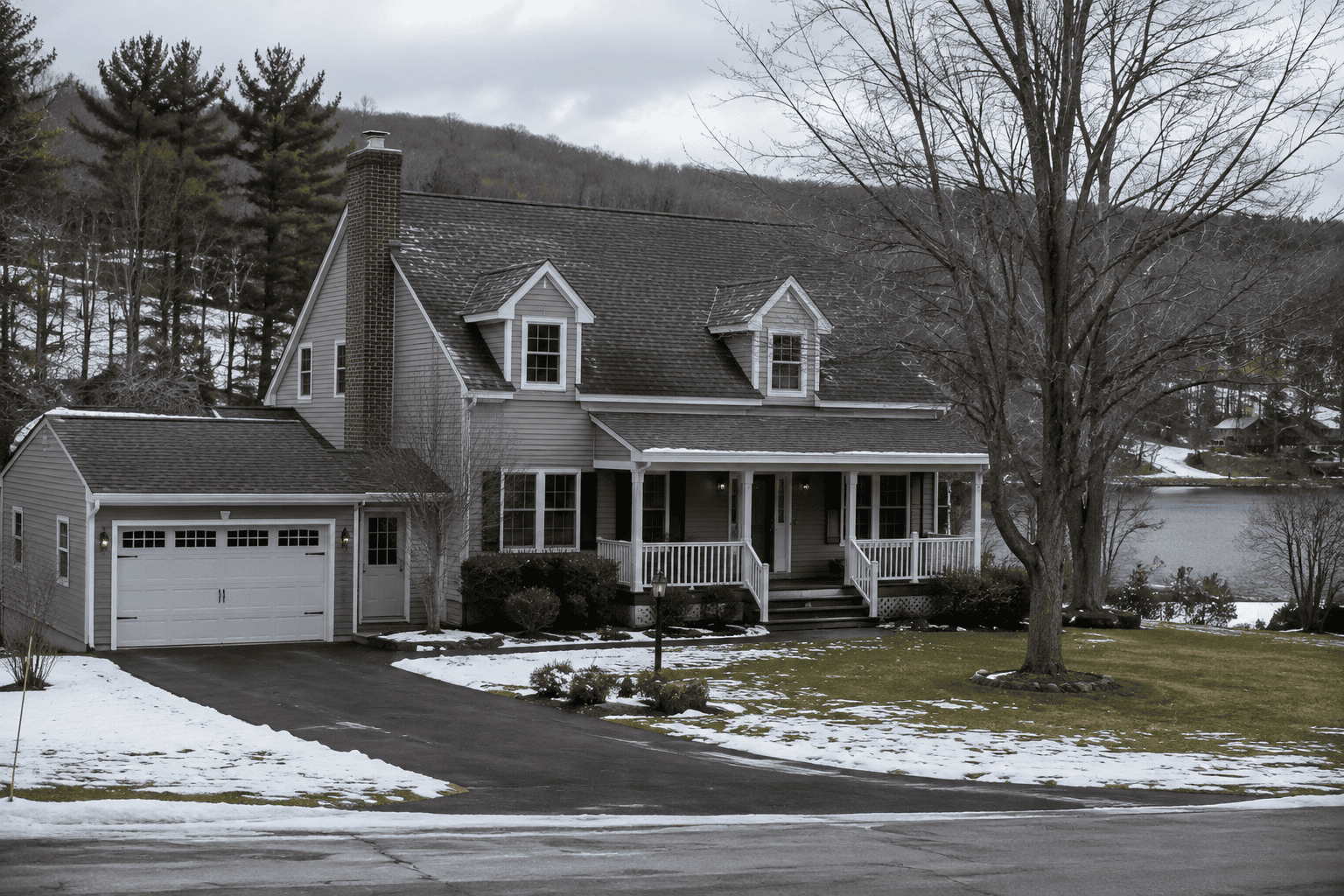
Rochester homes take a beating from November through March. Lake-effect snow piles on, the temperature crosses freezing and back again dozens of times, and the salt we throw at our walks works its way into everything porous. By the time the thaw comes, two parts of the house usually show the damage first: the roof and the brick.
Both are fixable, and both reward planning ahead instead of reacting after a leak or a crumbling step forces the issue.
What Winter Actually Does to a Roof
Snow load is the obvious concern, and it matters most on older homes and additions built to lighter standards. The quieter problem is the freeze-thaw cycle. Water finds a hairline gap, freezes, expands, and makes that gap slightly bigger. Repeat that forty times a winter and small openings become real ones.
Ice dams do the rest of the work. Heat escaping through an underinsulated attic melts the snowpack, the meltwater runs down to the cold eave, and it refreezes into a ridge that backs water up under the shingles. Homeowners tend to blame the roof covering when the actual cause sits in the attic.
Roofing Materials That Handle Lake-Effect Winters
No covering is immune to a Rochester winter, but the four options below handle repeated freezing very differently, and the gap widens as the roof ages.
Asphalt Shingles
Still the most common choice locally, and a good architectural shingle performs well if it is installed with a proper ice and water barrier at the eaves and valleys. The limitation is thermal cycling. Repeated freezing makes asphalt brittle over time, which shows up as granule loss and cracked tabs somewhere around year fifteen to twenty here.
Standing Seam Metal
Metal sheds snow rather than holding it, which reduces ice dam risk and takes weight off the structure. Expect to add snow guards above entries and driveways so the load does not release all at once onto someone’s head. Cost runs well above asphalt, but a metal roof installed on a Rochester home is often the last one that house needs.
Synthetic Shake and Slate
Composite products have become a strong middle option among roofing materials in New York, particularly for homeowners who want the look of cedar or slate without the drawbacks. Real cedar absorbs moisture, then swells and splits as it freezes. Natural slate is beautiful and lasts a century, but it is heavy enough that many houses need structural review first. Synthetic versions do not absorb water, weigh a fraction of stone, and carry high fire and impact ratings.
The Part No Material Fixes
Ventilation and attic insulation deserve attention before you spend on a covering upgrade. A sealed, well-insulated attic with balanced intake and ridge ventilation keeps the roof deck cold, and a cold deck is what actually prevents ice dams. Skip that step and you will have the same problem under a nicer roof.
Why Rochester Brick Takes a Beating
Much of the housing stock here is a century old or more, built with soft, low-fired brick and lime mortar. That combination worked because the mortar was softer than the brick and absorbed the movement. Then somewhere along the line a lot of these walls were repointed with hard modern portland mortar, which does the opposite. Moisture gets trapped, expands, and pops the face off the brick instead. That is spalling, and it is the most common serious masonry problem on older Rochester homes.
The white chalky bloom you see on foundations and chimneys is different. Efflorescence is mineral salt carried to the surface by moisture moving through the wall. It signals a water issue, but the deposit itself is cosmetic.
Bringing the Brick Back
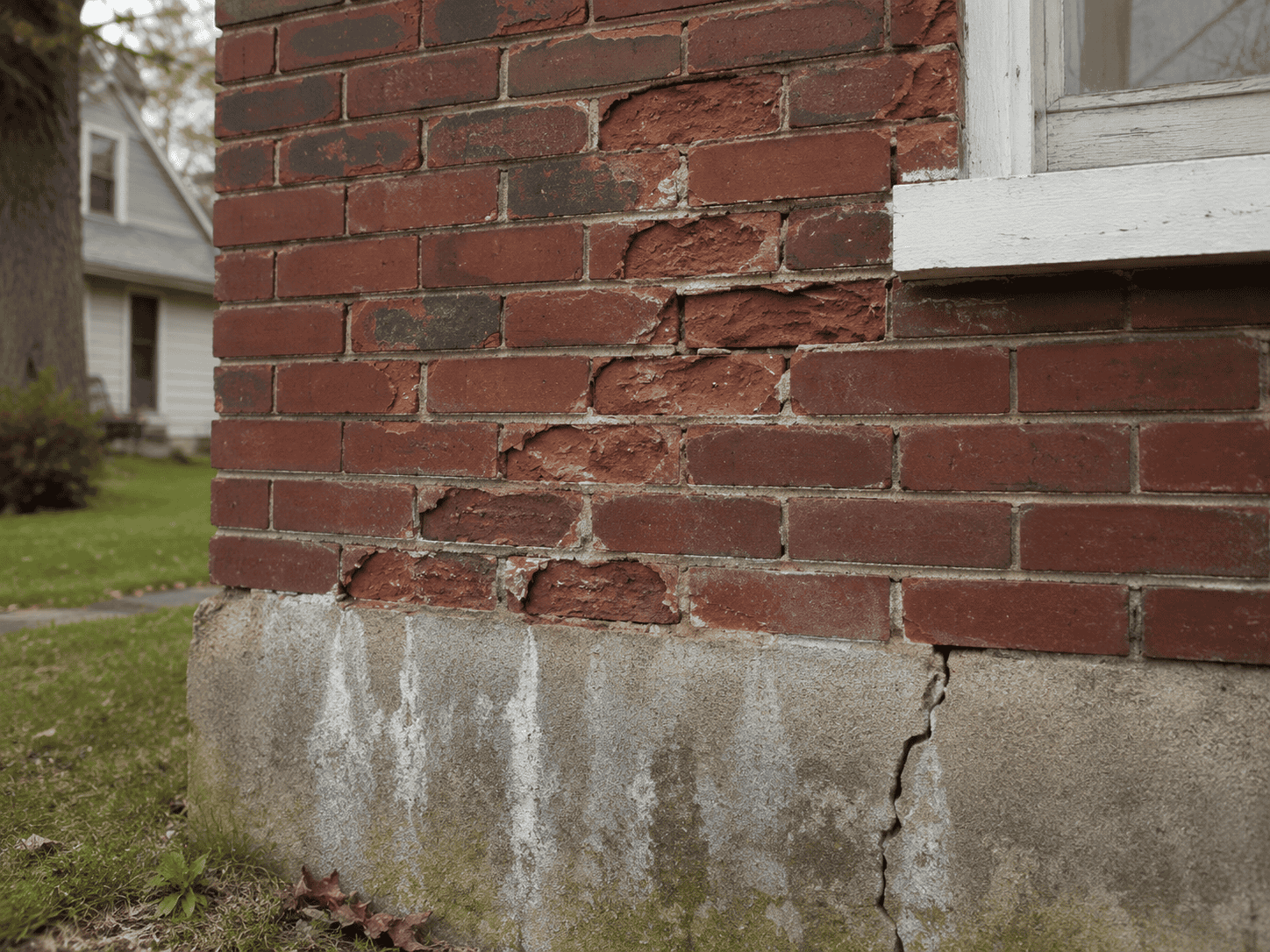
Restoration works best in order, and the order matters more than the products. Clean the wall, repair what the cleaning reveals, and only then think about protection.
Clean Before You Judge
A surprising amount of what looks like deterioration is just accumulated grime, salt residue, atmospheric staining, and organic growth on the shaded north face. Start there. A purpose-made concrete and masonry cleaner matched to your substrate will lift that without eating the brick, and once the surface is clean you can see what genuinely needs repair.
Resist the pressure washer. High pressure strips the fired outer skin off soft historic brick and erodes mortar joints, which accelerates exactly the damage you were trying to reverse. Low pressure and the right chemistry do more with less harm.
Repoint With the Right Mortar
Failing joints need repointing, and the mortar should be softer than the surrounding brick. For most pre-1930 Rochester houses that means a lime-based mix, not straight portland. Ask any mason you interview what they plan to use and why. A good one will have an answer ready.
Be Cautious With Sealers
Film-forming sealers on old brick can trap moisture inside the wall, and trapped moisture plus a Rochester February equals more spalling. A breathable water repellent has its place, but only after the wall is clean, sound, and drying properly.
Timing the Work
Masonry repair needs temperatures consistently above about forty degrees, so that work belongs to late spring through early fall. Roof assessments are worth doing in autumn, before the first real snow. That makes late winter the right moment to line up estimates and get on a calendar for the season ahead.
The ROC Home & Garden Show is a good place to start those conversations, with local roofing and masonry pros on hand to look at your photos and talk through what your house needs.