
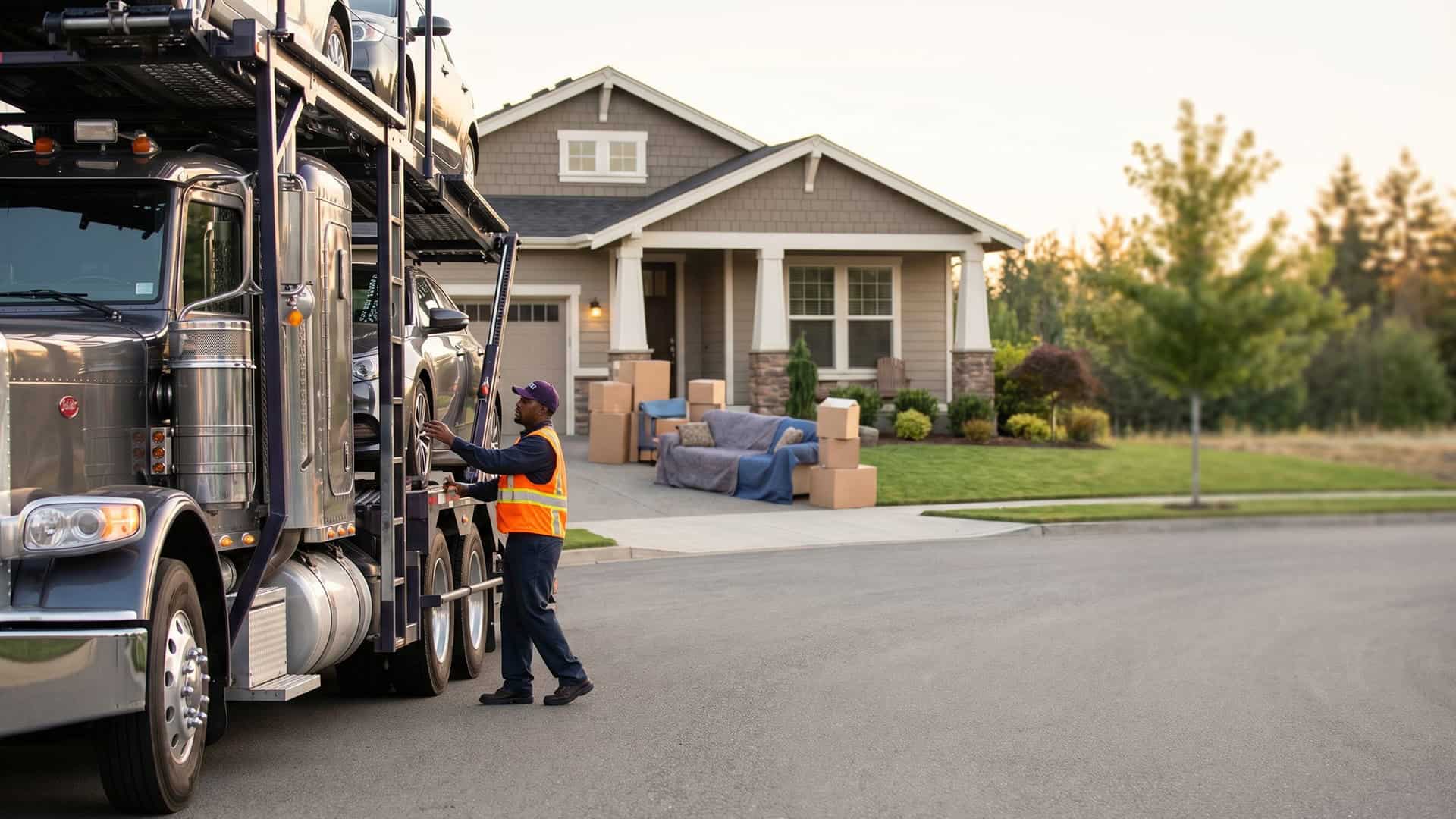
Most people think car shipping is simple. A truck comes, picks up the car, and drops it off somewhere else.. Sounds clean but that’s not really how it works.
When you move houses you already have a million things happening at the same time. You just want the car transport part to run like a simple taxi ride where you call a guy and he drives your car over.
In reality your car becomes just one piece inside a much bigger system. It gets added into routes, adjusted around other vehicles, and influenced by rules that you dont really see. Once you understand that things start making a lot more sense.
The whole process is built around keeping the trucks moving, not just convenience for one single person. That is the only way the system actually works in real life.
Why Your Car Usually Isn’t Going Direct
It feels logical to assume your car goes straight from point A to point B. That almost never happens on the road.
The carriers are not running trips just for one vehicle. They build long routes with multiple pickups and multiple deliveries, and your car gets placed into that plan where it fits best on the trailer.
That is because of how the business works behind the scenes. Trucks need to stay as full as possible at all times. Empty space on a trailer means lost money for the driver, and long detours slow everything down for the other customers. So instead of planning the whole trip around your shipment, your shipment gets planned around everything else on that truck.
Because of that your car might move in directions that don’t look direct at all. It might go slightly off route first to grab another car in a different town, then continue toward the final destination.
That’s also why pickup and delivery times are always given as windows instead of exact appointments. The route is still shifting and changing as the truck moves from state to state.
The Hidden Clock That Controls Everything
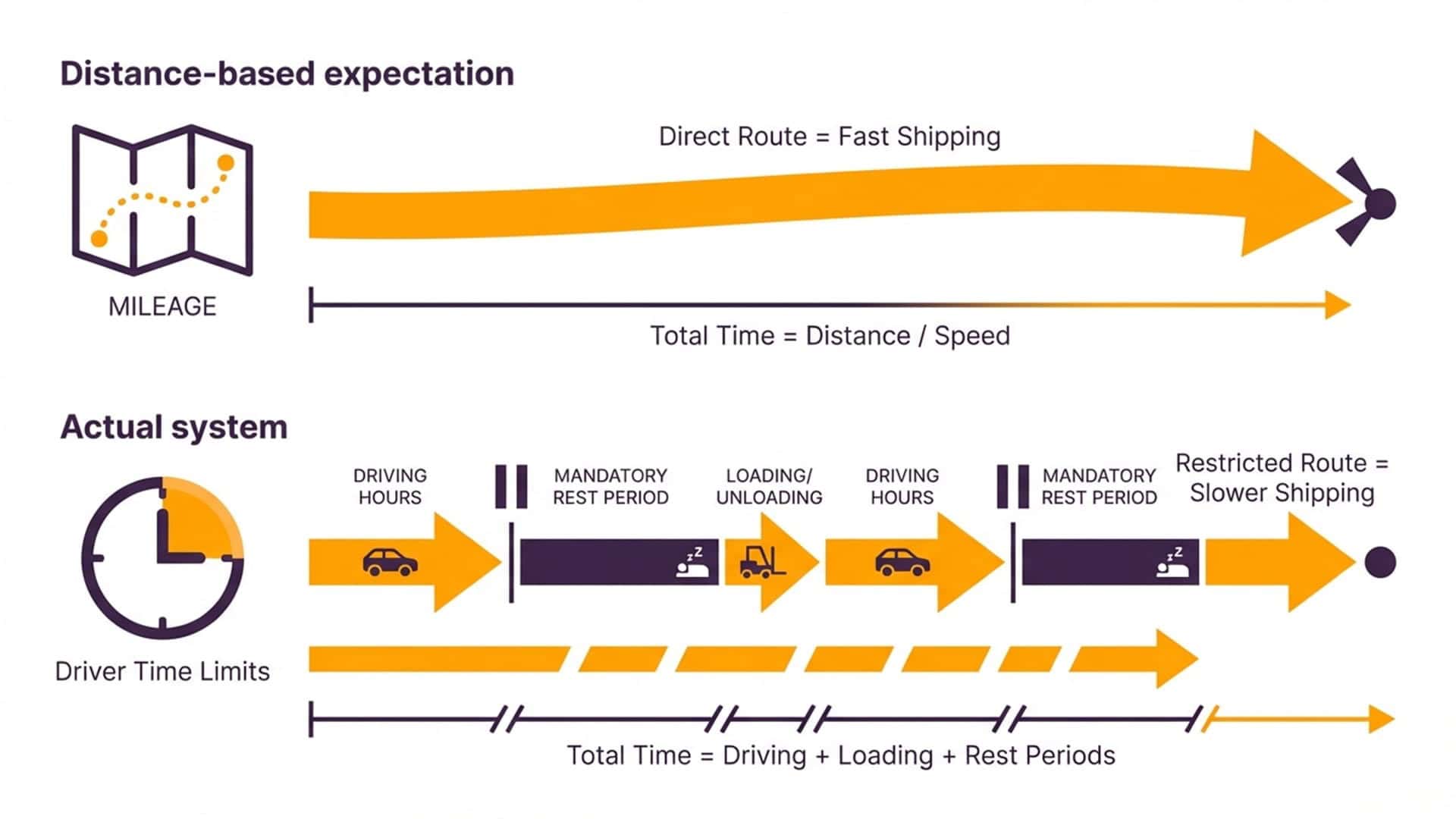
Most people think distance decides how long shipping takes. But the system doesn’t really run on miles.
It runs on strict time limits.
Drivers have federal rules for how long they can work every day. They can only drive a certain number of hours per shift, and once that limit is reached they have to pull over and sleep.
And it is not just driving that burns the clock.
Loading cars on the ramps, unloading them, waiting at weigh stations, and doing highway inspections all counts as working time too.
So even if a driver wants to push a bit more and finish faster to get home, they cant do it. Everything is tracked electronically now by computers inside the truck, so there is no way around the rules.
That is why sometimes a shorter route still takes longer than expected. It’s not always about the physical distance, it’s about how that distance fits into the available legal time the driver has left for the week.
What Door to Door Really Means in Practice
Getting door to door car shipping sounds like the truck will park right in front of your driveway. Sometimes it does but not always.
Car carriers are big. Really big. Some of them go up to 80 feet long, and that creates real physical limitations in normal residential neighborhoods.
Tight streets, parked cars on the curb, low tree branches, all of that makes access impossible for a giant rig. So instead of forcing the truck down a bad street and risking a crash, drivers usually arrange a nearby meeting point.
That could be a grocery store parking lot, a wide main street, or some open dirt space close to your home. It still counts as door to door, just adjusted for reality so the truck doesn’t get stuck.
This is one of the things people dont expect when they book, but it happens very often in real life.
What Actually Happens Before Pickup
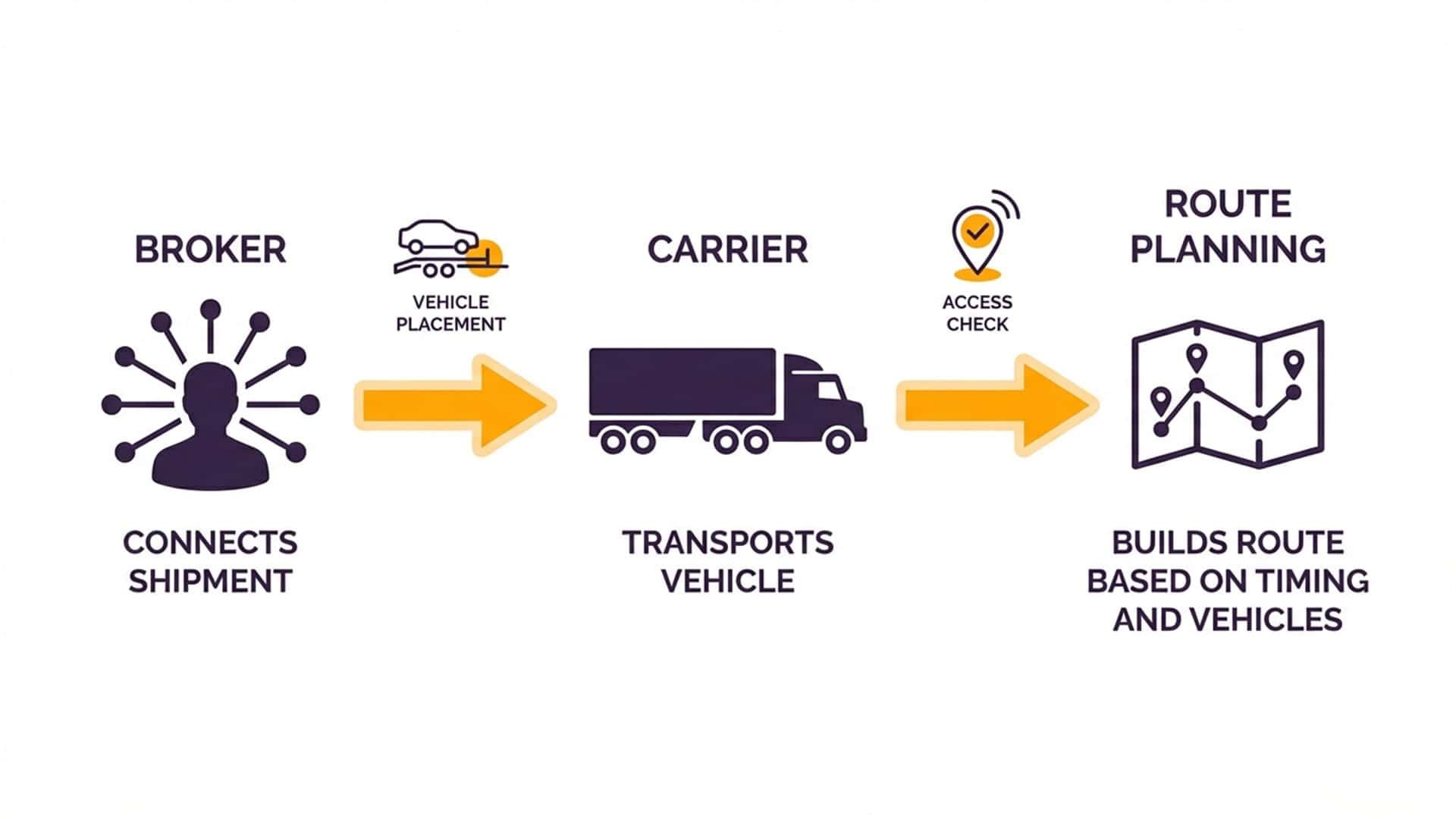
The process starts way before any truck is even assigned to you.
If you are working with a broker, they are not the ones physically transporting your car. They are connecting your shipment with a carrier that has the right route and timing.
That difference matters a lot more than people think.
A broker arranges everything and handles the paperwork, but the carrier is the guy actually driving the truck and moving the vehicle. They are two separate roles, even if it doesn’t feel like it from the outside looking in.
Once a carrier is found dispatch starts building the actual route. They look at timing, other vehicles on the load board, available space on the trailer, and how everything fits together.
Then comes the practical side of things.
Can the truck access the pickup area safely? How will the car be loaded on the ramps? Where will it be placed on the upper or lower deck?
By the time pickup day comes, most of those decisions are already made.
Securement Is Not a One Time Step
Loading a car is not just a matter of driving it up and strapping it down quickly.
There are strict rules around how vehicles must be secured to the trailer. The goal is to prevent any suspension movement or shifting during transit over rough roads.
And it does not stop there.
Drivers are required to check the securement shortly after starting the trip, usually within the first 50 miles of driving. If something shifted or a strap got loose, they stop on the highway shoulder and fix it.
That takes time. It also affects how the rest of the route continues for the day.
If the vehicle is bigger, heavier, or modified in some way, it may take longer to secure properly. That small detail can shift the entire schedule for everyone else waiting on that truck.
What Really Drives the Price You See
Most people think pricing is based only on the miles being driven. It is not that simple.
Fuel plays a massive role in the background.
Diesel prices change often, and when they go up at the pump, transport costs follow right behind them.
Driver wages are another big factor that changes. Then there is insurance costs, trailer equipment, tire maintenance, and everything else required to keep heavy trucks running on the road safely.
On top of that there is the demand in the market.
If there are lots of people moving cars out of a state but not enough available trucks, prices go up fast. If there is less demand and empty trucks need cargo, prices settle down.
That is why quotes change even for the exact same route if you check a few weeks later.
When a company like Rivalane gives a price, they are looking at all of those moving parts in the market, not just the miles on a map.
Risk Is More Than Just Damage
When people think about shipping risk they usually only think about scratches or dents on the door.
But the real picture of risk is much bigger than that.
You are dealing with large trucks moving long distances, under strict federal rules, through changing road conditions. That alone creates a lot of moving parts.
A bad storm can delay things for days. Heavy city traffic can shift routes completely. Mechanical issues on the truck can slow everything down to a complete stop.
Even something small, like a delayed pickup from the customer before you, can affect the rest of the week’s schedule for the driver.
So when things do not go exactly as planned its not always a mistake by the driver. It is just how the system reacts to the real world.
Why Flexibility Changes Everything
If there is one thing that makes the whole process smoother, it is keeping your schedule flexible.
When you allow a wider pickup window for the driver, carriers can easily fit your vehicle into a better route.
That usually means faster assignment and fewer headaches for everyone.
If your timing is too strict and you demand a specific Tuesday, it becomes much harder to match everything up.
That can delay things or force the broker to increase the price to find a driver willing to do it.
Flexibility also helps a lot when something unexpected happens on the road. There is room to adjust the plan without breaking the whole move.
The Difference Between Open and Enclosed Without the Marketing
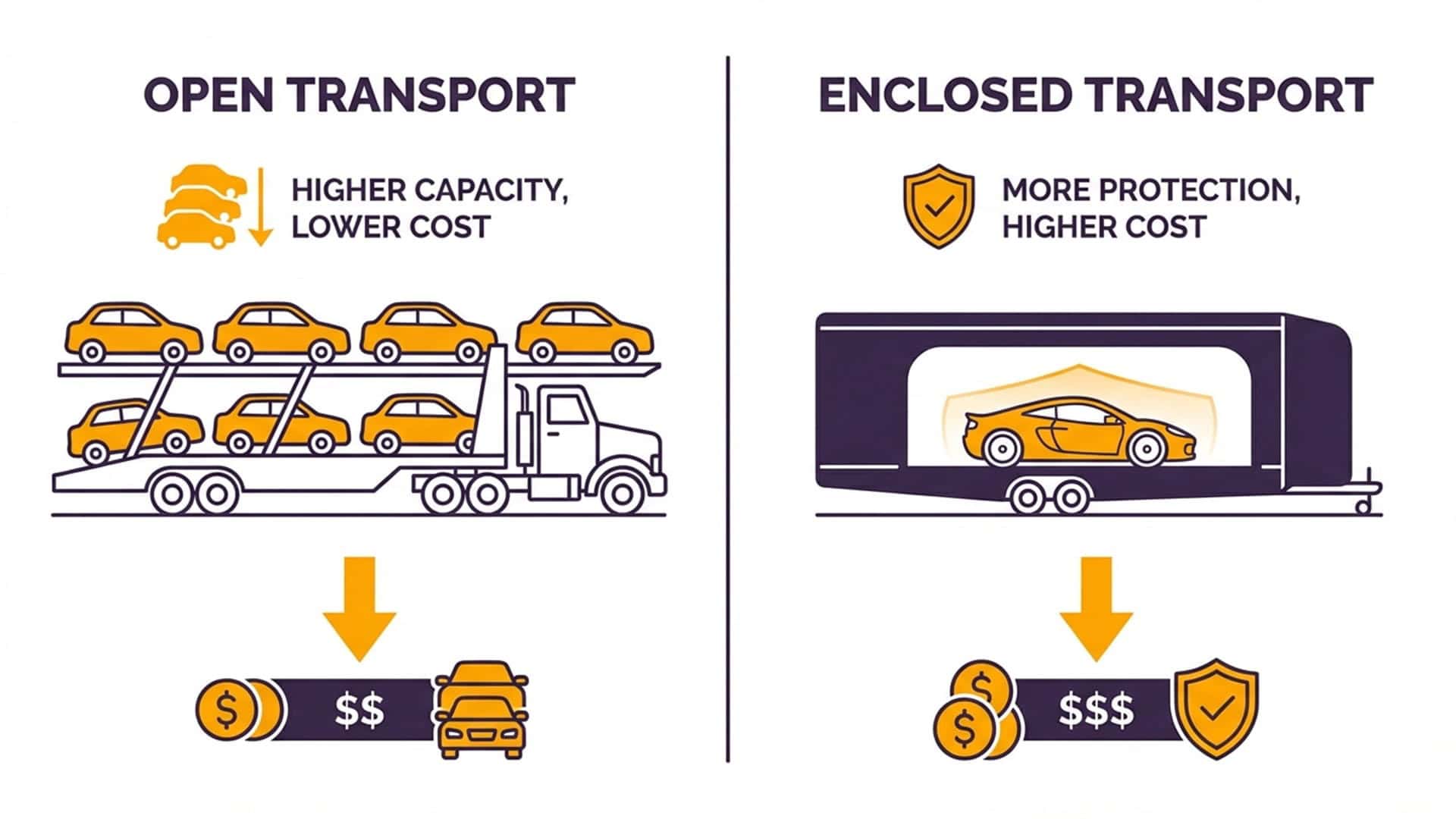
A lot of people ask about using open car transport versus enclosed transport.
Open transport is way more common because it allows more vehicles on one single trailer.
Because of that it makes the trip more efficient and cheaper for everyone involved.
Enclosed transport offers more physical protection from rain and rocks, but those trailers carry fewer cars inside. That means higher cost per car and sometimes much longer wait times to find
a truck heading your way.
It is not about one method being perfectly better than the other. It just depends on the situation, the value of the car, and what you are personally comfortable with.
Car shipping during a move is not as simple as it looks on the surface.
It is a system with rules, limits, and constant daily adjustments.. Routes change around, timing shifts, and small details matter way more than expected.
Once you understand how it actually works behind the wheel, things feel a lot less random.
Not perfect, not always smooth, but it follows a real logic.